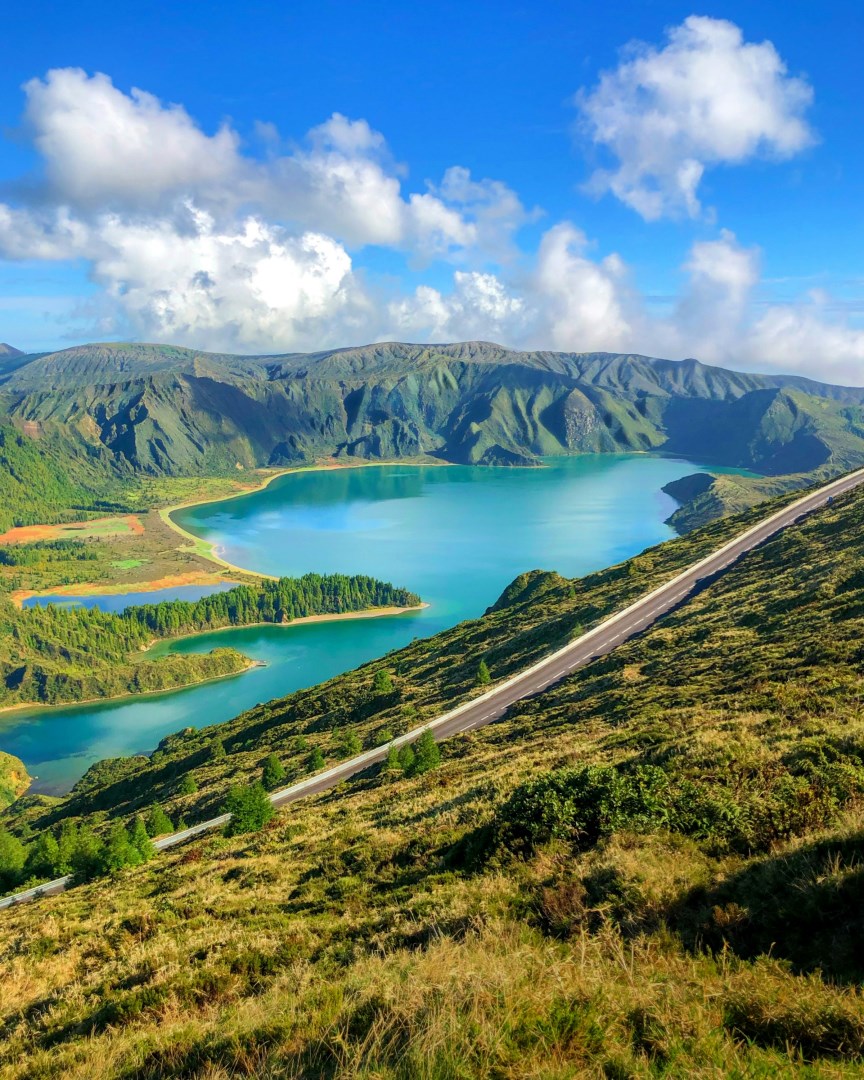
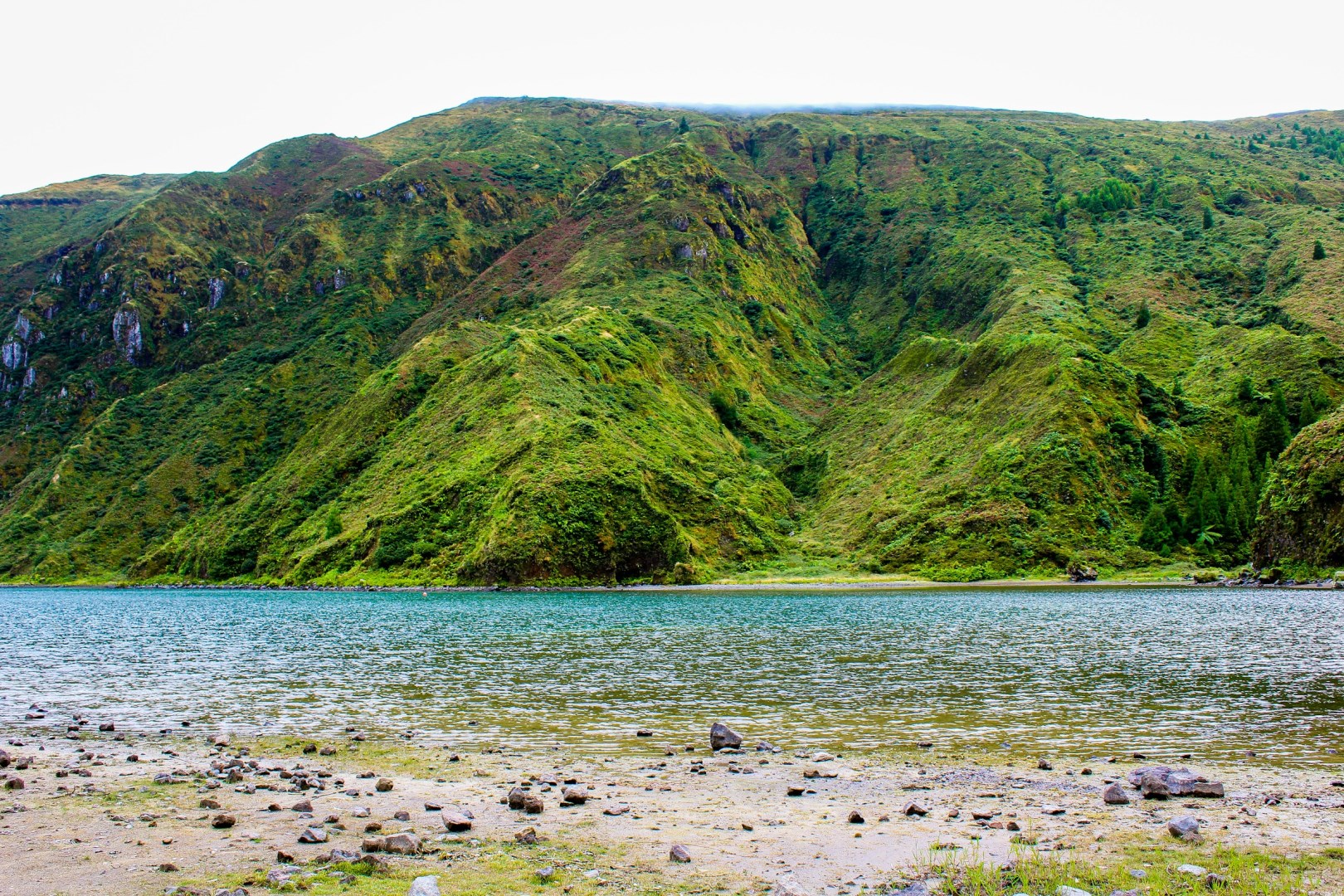
Lagoa do Fogo is a volcanic crater lake on São Miguel Island in Portugal’s Azores archipelago. Set within a protected landscape in the island’s central highlands, the lake occupies a large caldera surrounded by steep slopes covered with native vegetation. Its remote setting and undeveloped shoreline distinguish it from the more settled areas of São Miguel. The lake is part of the Lagoa do Fogo Nature Reserve, an area established to protect its geological features, plant life, and surrounding habitats.
The landscape around Lagoa do Fogo reflects the volcanic origins of the Azores and the natural forces that shaped São Miguel. The lake lies within the Água de Pau Massif, a volcanic complex with numerous geothermal features. The surrounding vegetation includes native Azorean species as well as plants introduced over time. Conservation measures help protect the lake and its watershed, while the area also holds importance for understanding the island’s volcanic geology and the ecological development of its upland environments.
Several viewpoints along the mountain roads provide elevated views over Lagoa do Fogo and its surrounding caldera. Miradouro da Lagoa do Fogo is one of the best-known places to see the lake from above, while trails in the protected area allow access to parts of the surrounding landscape. The lake’s shores include a sandy beach that can be reached by a walking route from the higher viewpoints. Weather conditions can change quickly at this elevation, with clouds and mist frequently altering the appearance of the crater and lake.
Lagoa do Fogo is also notable for its role in São Miguel’s freshwater environment. Water from the lake forms part of the island’s natural drainage system, while the surrounding slopes help collect rainfall in an area known for frequent precipitation. The protected landscape supports birds and other wildlife adapted to the Azorean environment. Its combination of a volcanic caldera, freshwater lake, native vegetation, and highland terrain makes Lagoa do Fogo one of São Miguel’s most significant natural sites.